Living with chronic knee or hip pain changes everything. Tasks that used to be simple become daily challenges. When you get a diagnosis of osteoarthritis, the typical medical advice often feels limiting. Doctors usually prescribe rest, physical therapy, and pain medications. When those stop working, the conversation quickly turns to a total joint replacement. But surgery requires a long recovery, and artificial joints do not last forever. Because of these drawbacks, many people are looking for a different path. Exploring regenerative medicine, specifically treatments like stem cells in Colombia, offers a biological approach to managing joint pain instead of relying on mechanical replacements.
Understanding Joint Degeneration
To understand how regenerative therapies work, it helps to know exactly what is happening inside an arthritic joint. Osteoarthritis is often called a wear and tear disease. Over time, the smooth articular cartilage that cushions your bones begins to wear away. Cartilage does not have its own blood supply. This means it has a very hard time healing itself once damage occurs.
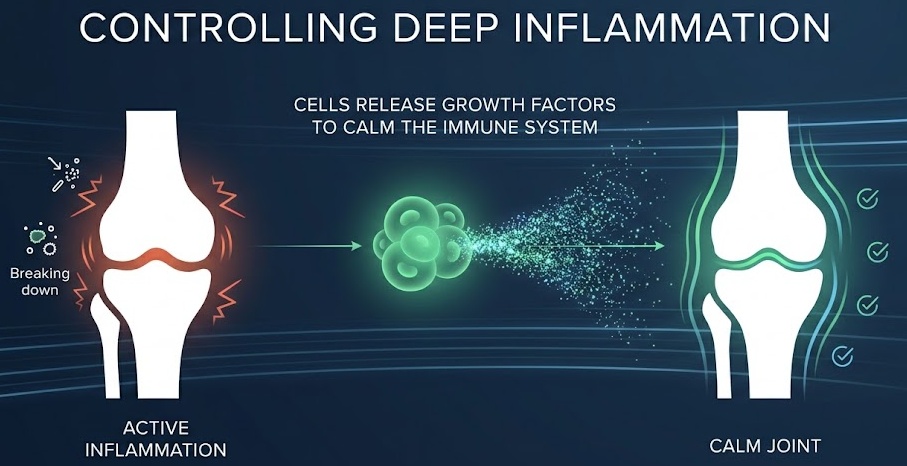
However, friction is only half of the problem. As the cartilage breaks down, it sheds tiny particles into the joint space. Your immune system reacts to these particles by triggering inflammation. This chronic swelling, known as synovitis, releases destructive chemicals that eat away at the remaining cartilage even faster. This is why your joints feel hot, stiff, and painful.
Doctors grade osteoarthritis on a scale from one to four. Grade one and two mean mild thinning. Grade three involves moderate joint space narrowing. Grade four is severe bone on bone wear. Your specific grade plays a big role in determining the right treatment strategy.
The Biological Mechanism: How Stem Cells Work in Joints
Mesenchymal stem cells are unique cells that act as managers for your body’s healing processes. When placed into an arthritic knee or hip, they perform two primary jobs to change the environment inside the joint.
Controlling Deep Inflammation
The first and most immediate effect is inflammation control. These cells release specific proteins and growth factors that essentially tell your immune system to calm down. By shutting off the destructive inflammatory response, the joint environment stops actively breaking down your existing cartilage. This shift is responsible for the significant pain relief many patients experience.
Cartilage Protection and Tissue Support
The second job involves tissue support. While stem cells do not instantly grow a brand new joint overnight, they do stimulate your existing cartilage cells to work harder. They encourage the production of new collagen and structural proteins. This helps stabilize the joint and preserves the cartilage you still have.
Can Stem Cells Truly Replace Knee or Hip Surgery?
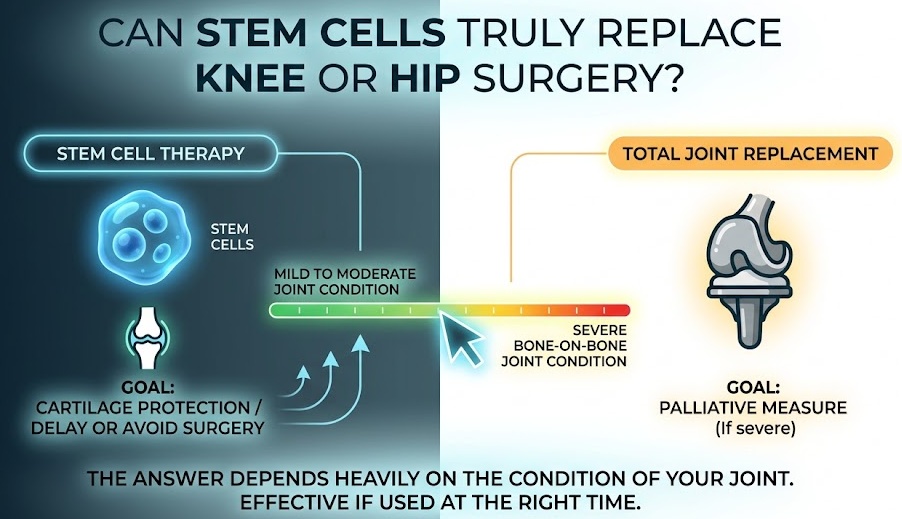
The answer depends heavily on the condition of your joint. Stem cell therapy is not magic, but it is a highly effective tool for delaying or completely avoiding surgery if used at the right time.
For patients with mild to moderate osteoarthritis, the goal is disease prevention and surgery avoidance. If you still have a decent amount of joint space, regulating the inflammation and supporting the tissue can often provide years of pain relief. Many patients in this category return to their favorite activities without ever needing a scalpel.
For patients with severe bone on bone arthritis, the expectations shift. In these cases, regenerative treatments act more as a palliative measure. They can still reduce pain and improve daily mobility, which is incredibly helpful for people who are not candidates for surgery due to age or other health conditions.
Why Consider Treatment in Colombia?
Colombia has emerged as a premier destination for advanced medical care. The country features highly trained orthopedic specialists who use precise imaging technology like ultrasound and fluoroscopy to deliver treatments exactly where they are needed.
Additionally, the regulatory framework in Colombia allows medical facilities to use advanced cellular protocols. This means doctors can utilize expanded cell populations, yielding higher cell counts than the basic bedside centrifuge techniques often found elsewhere. Patients receive comprehensive, high quality care at a fraction of the cost they might face in North America or Europe, without sacrificing safety or medical standards.
The Patient Journey: What to Expect
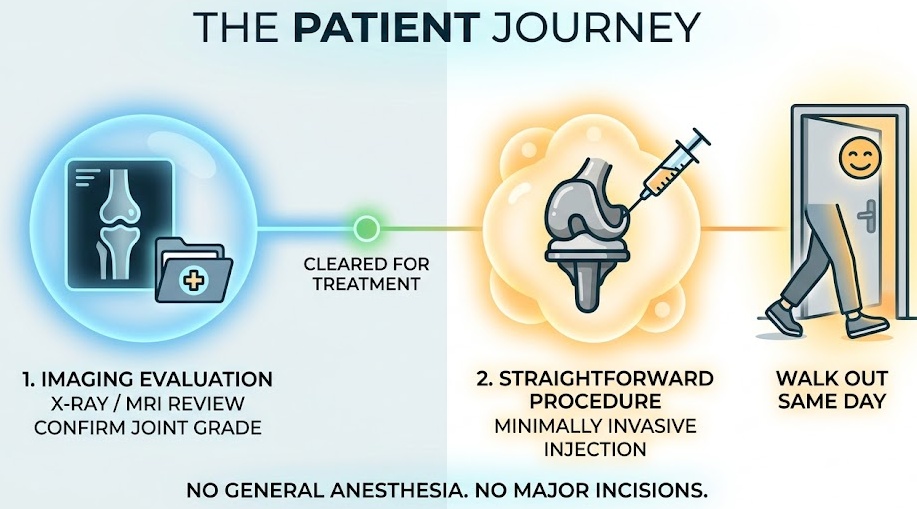
The process begins with a thorough evaluation of your imaging, such as X-rays or MRIs, to confirm your specific joint grade. Once cleared for treatment, the procedure itself is straightforward.
The cells are delivered via a minimally invasive injection directly into the joint space. There is no general anesthesia required and no major surgical incisions to heal. Most patients walk out of the clinic the same day.
Following the procedure, patients undergo a specific rehabilitation plan. This usually includes a short period of resting the joint followed by targeted physical therapy to strengthen the surrounding muscles. While some initial pain reduction can happen within a few weeks, structural improvements and maximum relief typically unfold over three to six months.
Conclusion and Next Steps
Total knee or hip replacement is a permanent, irreversible step. Stem cell therapy provides a biological bridge that tackles the root causes of osteoarthritis, which are chronic inflammation and tissue breakdown. If you have remaining cartilage, this approach gives your body the tools it needs to protect your joint and maintain your quality of life.
Are you ready to find out if you can avoid joint replacement? Contact our team today for a thorough review of your imaging and a personalized treatment plan.